


Colorectal cancer is the second leading cause of cancer death in the United States for men and women combined.
This information is important:

The best screening for finding precancerous polyps and the only test that detects and prevents cancer by removing polyps before they can turn into cancer 1,3,4

The only test recommended for people with risk factors such as personal history of polyps or cancer, family history of cancer, or inflammatory bowel disease 1

The only screening test recommended every 10 years for average-risk patients with no symptoms. Repeat timing depends on your colonoscopy findings and current guidelines. 1
If you're experiencing rectal bleeding, persistent changes in bowel habits, unexplained weight loss, abdominal pain, or other concerning symptoms, contact your healthcare provider.
Schedule a Colonoscopy
Most adults at average risk should begin regular colorectal cancer screening at age 45.
Screening is intended for people who may have no signs or symptoms of colorectal cancer.
Colonoscopy Does More Than Look
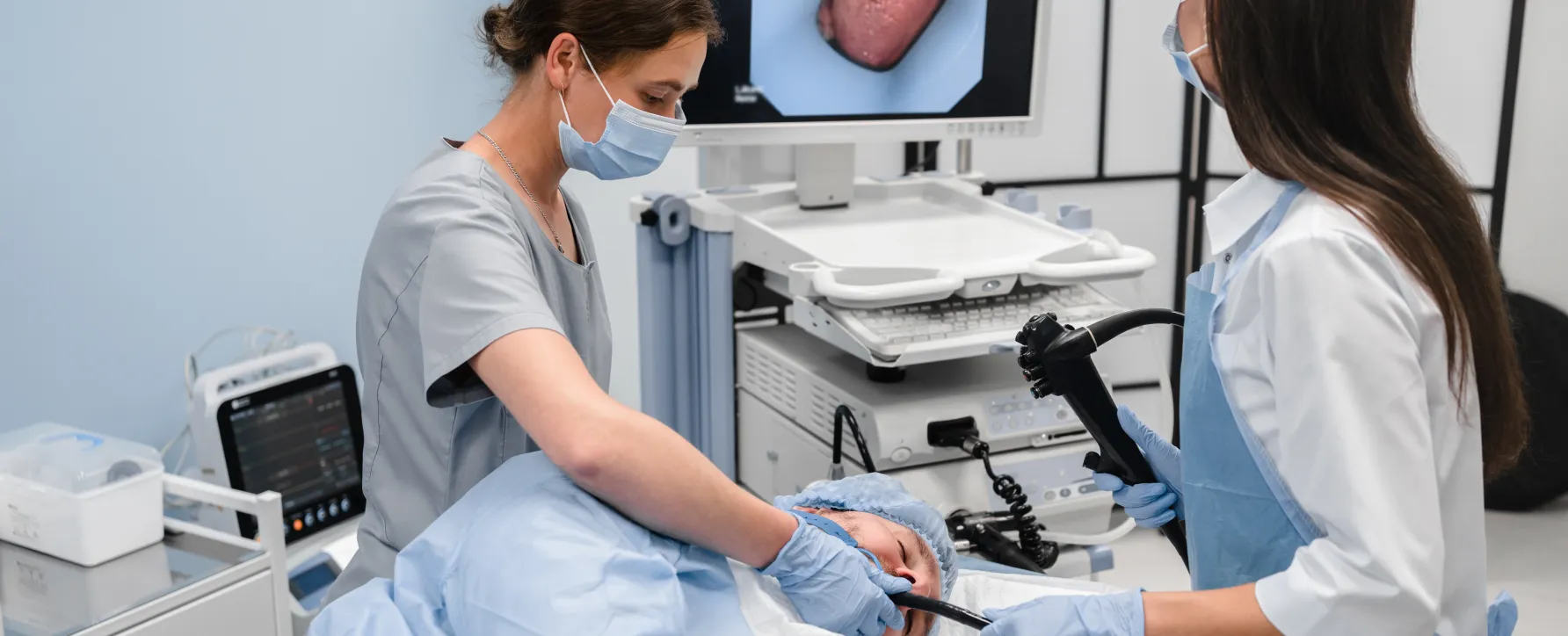
A colonoscopy allows your gastroenterologist to examine the colon directly and remove many precancerous polyps during the procedure.
Stool- and blood-based screenings are only appropriate for average risk patients ages 45 and older who refuse or are unable to have colonoscopy. Stool- and blood-based screenings are not for patients with high risk of colorectal cancer or conditions associated with high risk, such as personal history of polyps, IBD, and family history of certain cancers. 2,3
WHAT WAS
MISSED?
COLOGUARD
MISSED 4
SHIELD
MISSED 5
FIT
MISSED 4
People with colon cancer
1 in 13
1 in 6
1 in 4
Polyps that could soon become cancer
57%
87%
76%
REFERENCES: 1. American Society of Gastrointestinal Endoscopy. Colorectal Cancer Screening, Which Test Should You Get? https://www.asge.org/docs/default-source/default-document-library/colorectalscreening_poster_2020_digital.pdf. 2. Patel S, May F, Anderson J, et al. Updates on Age to Start and Stop Colorectal Cancer Screening: Recommendations From the U.S. Multi-Society Task Force on Colorectal Cancer. Gastroenterology 2022;162:285–299. https://doi.org/10.1053/j.gastro.2021.10.007. 3. Rex D, Boland C, Dominitz J et al. Colorectal Cancer Screening: Recommendations for Physicians and Patients from the U.S. Multi-Society Task Force on Colorectal Cancer. The American Journal of Gastroenterology 2017;112:1016-1030. http://doi.org/10.1038/ajg.2017.174. 4. Imperiale T, Ransohoff D, Itzkowitz S, et al. Multitarget Stool DNA Testing for Colorectal-Cancer Screening. New England Journal of Medicine, 2014;370:1287-1297. https://www.nejm.org/doi/full/10.1056/nejmoa1311194. 5. Chung D, Gray D, Singh H, et al. A Cell-free DNA Blood-Based Test for Colorectal Cancer Screening. New England Journal of Medicine, 2024; 390:973-983. https://www.nejm.org/doi/full/10.1056/NEJMoa2304714. 6. U.S. Food and Drug Administration. Summary of Safety and Effectiveness Data (SSED). https://www.accessdata.fda.gov/cdrh_docs/pdf13/P130017b.pdf. All links accessed December 19, 2024.

Digestive Health Partners participates with most Medicare, Medicaid, and commercial insurance plans. DHP will submit claims on your behalf when the necessary insurance information is provided before your visit.
Screening vs. Diagnostic Colonoscopy
Insurance coverage can differ depending on how a colonoscopy is classified. Your symptoms, personal history, family history, previous polyps, or other findings can affect whether a procedure is considered preventive, surveillance, or diagnostic. DHP recommends verifying your specific benefits directly with your insurance carrier.
View Insurance & Billing Information
Digestive Health Partners offers discounted rates for patients who do not have health insurance, are underinsured, or choose to pay without filing insurance.
Payment in full is requested prior to scheduling. If you choose the self-pay option, Digestive Health Partners will not file a claim with your insurance.
Please call our office to discuss available self-pay options.
CALL ASHEVILLE
(828) 254-0881
CALL HENDERSONVILLE
(828) 696-3099
Schedule Your Colonoscopy